Birds are some of the most colorful organisms. However, little was known about how their vast diversity of coloration came to be until the past century. Like many organisms, birds synthesize dietary carotenoids into red and yellow pigments. However, parrots have a novel molecular pathway to create these pigments despite retaining the ability to synthesize carotenoids. This novel pigment is called psittacofulvin.
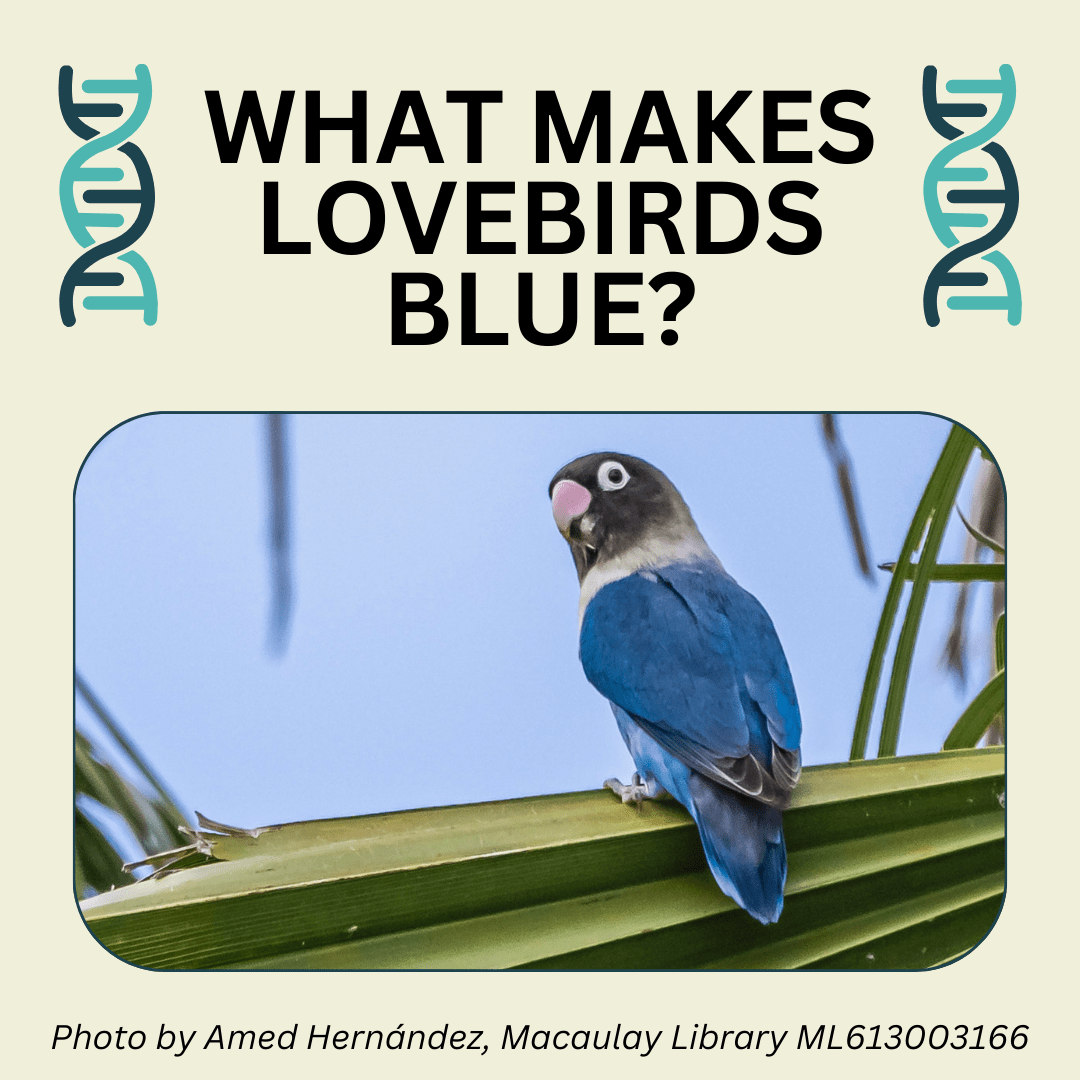
Parrots like lovebirds and budgerigars (budgies) combine yellow psittacofulvin with structural blue to create their distinct green plumage. Some pioneering work in budgies found the region responsible for psittacofulvin production via genomic mapping of wildtype (i.e. green) and blue budgies. Through the same study, they determined the mutation responsible for knocking out psittacofulvin. This same mutation was later found in eye-ring lovebirds!
I am now part of a project looking to find and describe other mutations responsible for blue and other mutant colors in lovebirds. Stay tuned!
 'Omics in the Anthropocene